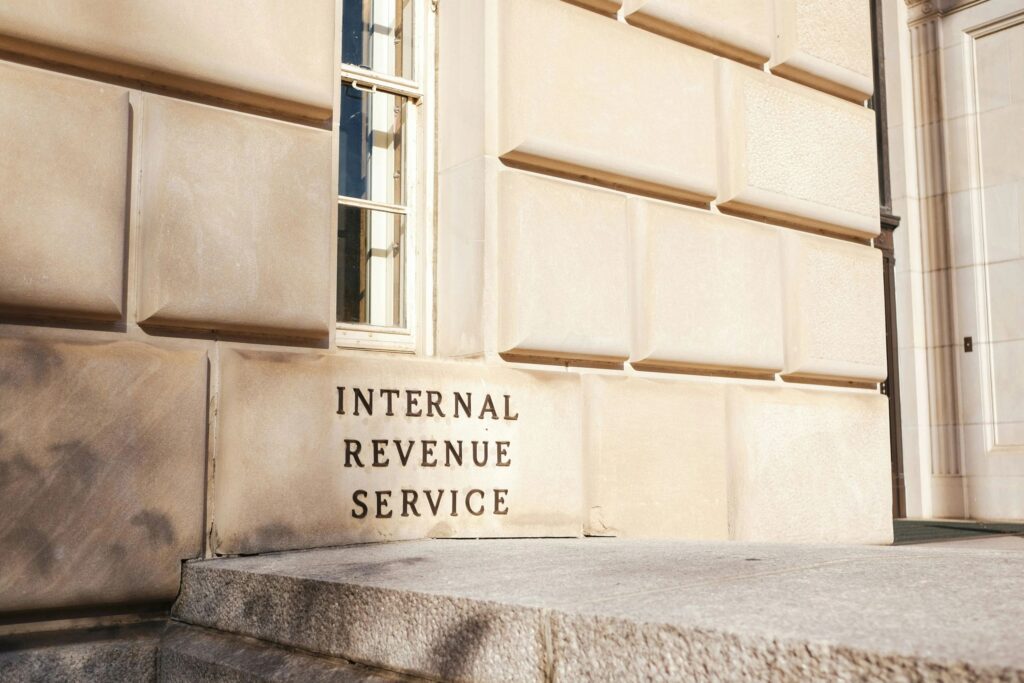
Knowing how to choose a tax preparer comes down to a few checks you can do in about ten minutes. Confirm the preparer has a valid PTIN. Look up their credential. Make sure they will sign your return, give you a copy, and send your refund to your own account. Never sign a blank or incomplete return. Ask whether they can represent you if the IRS writes back.
Those checks matter more than ever. In March 2026, the nonprofit Center for Taxpayer Rights published an undercover study of paid preparers who hold no professional credential. Most of the returns its testers received were wrong, and some included deductions that had no basis at all.
Most preparers are honest, and plenty of good ones are not CPAs. Enrolled agents and attorneys are credentialed tax professionals too. The point of this post is not that one title is the only safe choice. It is that you should know what you are getting before you hand over your Social Security numbers.
What the 2026 Undercover Study of Tax Preparers Found
The report, Report on the 2025 Filing Season Mystery Shopping Visits, describes 53 visits to non-credentialed preparers in six states: Alabama, Arizona, New Jersey, North Carolina, Oregon, and Texas. Testers posed as lower-income filers with one of three common situations. They came away with 25 prepared returns. Fees ranged from $60 to $800.
The report also pulled together IRS data on the preparer industry. As summarized by the Journal of Accountancy (April 13, 2026):
- About 56% of the more than 684,000 IRS-registered preparers at the start of 2026 held no CPA, attorney, or enrolled agent credential.
- Returns from uncredentialed preparers accounted for over 94% of the dollar adjustments in earned income tax credit audits for tax year 2021.
- Of the preparer penalties assessed on uncredentialed preparers, the IRS had collected about $12.5 million of $66.5 million, or less than one dollar in five.
Scenario 1: Unmarried parents claiming children
Testers played the lower-earning parent in a two-earner household who wanted to claim one child. Of 11 returns prepared, 9 requested the wrong refund, with errors from $2,330 to $11,996. Nine used head of household status incorrectly. Three claimed both children even though the tester asked to claim one, which sets up a duplicate claim with the other parent.
One tester reported: “She said she will create a lease for me to put in my file if I get audited.” A made-up document is not help. You are the one who answers for it.
Scenario 2: A household with a non-parent caregiver
This scenario tested the difference between a qualifying child and a qualifying relative. All six returns got the key dependency question wrong, and all six requested the wrong refund. Five missed the credit for other dependents. One filed the tester as married filing jointly with someone she kept calling “her boyfriend.”
Scenario 3: A sole proprietor with cash and app payments
The tester had W-2 wages plus a side business paid through a payment app and $3,000 in cash. The correct Schedule C income was $6,733. All eight returns reported less. Results ranged from a loss of $3,828 to income of $5,865.
- Five returns claimed home office deductions of $2,400 to $9,600 that the report found were not allowed. The IRS requires a space used regularly and exclusively for business.
- Three returns left out the $3,000 in cash. One tester said the preparer “usually advises clients to report their cash only when it benefits them.”
- One return included a $4,000 deduction for employee wages the business never paid. Another claimed $8,040 in mileage.
Cash income is taxable income. Leaving it off a return is not a gray area.
Why the Preparer’s Mistakes Become Your Problem
Your preparer signs the return, but the IRS is clear that you are ultimately accountable for the accuracy of every item on it. If a return claims something you are not entitled to, the bill for tax, penalties, and interest comes to you.
The IRS calls the worst version of this a “ghost preparer.” That is someone who charges you but will not sign the return as the paid preparer. The IRS says not signing a return is a red flag that a preparer may be chasing a quick profit by promising a big refund or charging based on the size of the refund.
How to Choose a Tax Preparer: The IRS Checklist
These points come from IRS Tax Topic 254, How to choose a tax return preparer, and the IRS page on choosing a tax professional.
- Confirm they have a PTIN. Every paid preparer must have a Preparer Tax Identification Number and put it on your return. In the study, only 21 of 25 return copies included one.
- Check their credential and history. Search the IRS Directory of Federal Tax Return Preparers with Credentials and Select Qualifications. It lists CPAs, enrolled agents, attorneys, and Annual Filing Season Program participants who hold a current PTIN.
- Ask how they set fees. Avoid anyone who bases the fee on a percentage of your refund or promises a bigger refund than other preparers.
- Make sure the refund comes to you. Your refund should go into your own bank account, not the preparer’s.
- Never sign a blank or incomplete return. Review the finished return, ask questions, and sign only when you understand it.
- Expect questions. A good preparer asks to see your records and asks about your household and income. In the study, preparers routinely skipped those questions.
- Get a signed copy, and ask about support. The preparer must sign the return. Keep a full copy, and ask whether they will be around if a notice arrives in July.
If a preparer has harmed you, the IRS accepts complaints on Form 14157.
For a Texas CPA, use the TSBPA license lookup
In Texas, CPAs are licensed by the Texas State Board of Public Accountancy. You can confirm that any CPA, including me, holds an active license with the TSBPA license lookup. It takes less than a minute.
Who Can Represent You Before the IRS
Preparing a return and representing you afterward are different things. The IRS explains representation rights this way:
- Unlimited rights: CPAs, enrolled agents, and attorneys can represent clients on any matter, including audits, payment and collection issues, and appeals.
- Limited rights: Annual Filing Season Program participants can represent clients only on returns they prepared and signed, and only before revenue agents, customer service representatives, and similar IRS employees. They cannot handle appeals or collection matters.
- No rights: A preparer with only a PTIN cannot represent you before the IRS.
The AFSP is voluntary. Participants complete yearly continuing education, including a federal tax refresher course with a test. Representation rights matter most when a letter like a CP2000 notice arrives.
Congress Is Moving on Preparer Standards: The TAS Act
Senate Finance Committee Chair Mike Crapo and Ranking Member Ron Wyden introduced the bipartisan Taxpayer Assistance and Service Act in March 2026 as S. 3931. Senator Wyden cited the study as a reason to pass it.
The bill would raise penalties on preparers who leave off or misuse a PTIN and make willful ghost preparing a felony, according to the Journal of Accountancy. It would also tie getting a PTIN to background checks and continuing education, as reported by Thomson Reuters.
The Finance Committee approved the bill 26 to 1 in July. The full Senate passed it by unanimous consent on September 30, 2026, as an amendment to H.R. 5349. It now goes to the House. It is not law yet.
The AICPA supports the bill. Melanie Lauridsen, AICPA vice president for tax policy and advocacy, told the Journal of Accountancy: “You really just don’t know what you’re getting necessarily in [an uncredentialed] tax return preparer.”
When to Get Help With Your Return
If your return is a single W-2 and the standard deduction, good software may be all you need. Just avoid the common DIY filing mistakes. The study’s scenarios point to where extra care pays off: unmarried parents sharing a home, multi-generational households, and anyone with self-employment income, cash, or app payments. Self-employment is business tax work, so see small business tax preparation. In those cases, a credentialed professional who signs your return and stands behind it is worth considering. That can be a CPA, an enrolled agent, or a tax attorney. If a past return worries you, it is usually better to look at it now than to wait for a letter.
Choosing a Tax Preparer FAQ
Does a tax preparer need a license?
At the federal level, anyone with a PTIN can prepare returns for pay. CPAs, enrolled agents, and attorneys hold credentials with education, exam, and ethics requirements. The AFSP is a voluntary IRS program for non-credentialed preparers.
How do I check if a tax preparer is legitimate?
Search the IRS Directory of Federal Tax Return Preparers. For a Texas CPA, use the TSBPA license lookup. Confirm the preparer will sign your return with their PTIN.
Am I responsible if my tax preparer makes a mistake?
Yes. The IRS holds you responsible for the accuracy of your return, even when someone else prepared it.
What is a ghost preparer?
A ghost preparer is paid to prepare your return but does not sign it as the preparer. The IRS calls this a red flag.
Can my tax preparer represent me in an audit?
CPAs, enrolled agents, and attorneys can. AFSP participants can only in limited cases for returns they prepared. A preparer with only a PTIN cannot.
Work With a Credentialed CPA in North San Antonio
I am a Texas-licensed CPA and a former IRS Revenue Agent. I sign every return I prepare, and I am here after it is filed. I serve North San Antonio, Stone Oak and Sonterra, Bulverde, and all of San Antonio, in English and Spanish, with secure virtual service. Military families are welcome. Individual returns start at $500, and returns with a Schedule C start at $1,200. If a letter has already arrived, my first IRS notice review is a flat $250, completed in 3 to 5 business days. You get a fixed fee in writing before any work begins. No outcome is guaranteed.
Book a complimentary 15-minute fit call or call (210) 441-1293. Please don’t email tax returns, Social Security numbers, or IRS notices; I’ll send a secure SmartVault link.
Sources
- Center for Taxpayer Rights, IRS Return Preparer Strategy: Report on the 2025 Filing Season Mystery Shopping Visits (March 2026)
- Journal of Accountancy, “Uncredentialed tax preparer errors included fictitious deductions, review shows” (April 13, 2026)
- Journal of Accountancy, “Senate bill targets preparers who break the law, expands IRS reforms” (March 2, 2026)
- Congress.gov, S. 3931, Taxpayer Assistance and Service Act, 119th Congress
- GovInfo, H.R. 5349, Taxpayer Assistance and Service Act, Engrossed Amendment Senate (September 30, 2026)
- U.S. Senate Committee on Finance, Wyden statement on the Taxpayer Assistance and Service Act (March 16, 2026)
- Thomson Reuters Tax, “Senate passes broad tax administration reform legislation”
- IRS, Topic No. 254, How to choose a tax return preparer
- IRS, Choosing a tax professional (Directory of Federal Tax Return Preparers)
- IRS, Tax Tip 2025-11, Tips for choosing a tax professional
- IRS, Understanding tax return preparer credentials and qualifications
- IRS, Annual Filing Season Program
- IRS, Home office deduction
- Texas State Board of Public Accountancy, License Lookup
Looking for a CPA to prepare your return?
Book a complimentary 15-minute fit call to see whether Jessica can help, or call (210) 441-1293.

About the author
Jessica Gonzalez, CPA is a Texas-licensed CPA with public-accounting experience, more than 12 years of federal service at DHS, and prior service as an IRS Revenue Agent. She helps clients with tax, bookkeeping, planning, and selected IRS matters.
General Information Notice
This article provides general educational information and is not tax, legal, investment, or financial advice. Tax rules and their application may change and depend on specific facts. Reading this article or contacting the firm does not create an engagement, representation, or client relationship.
Prior employment with the Internal Revenue Service does not imply endorsement by the IRS.